Summer is a great time to be outdoors, since you can spend time enjoying nature without bundling up in thick clothes. However, there’s also a drawback to these warmer months: ticks are also enjoying the weather.

These annoying parasites are usually transferred onto your body as you walk through tall grass or undergrowth, and embed themselves in your skin, growing fat on your blood. Worse still, ticks can transmit serious diseases such as Tularemia, Rocky Mountain Spotted Fever, and Lyme disease. If you’re bitten by a tick, it’s important to know how to remove it safely. If you don’t, its barbed feeding tube may remain embedded in your skin, or it may rupture its contents into your bloodstream, leading to infection.
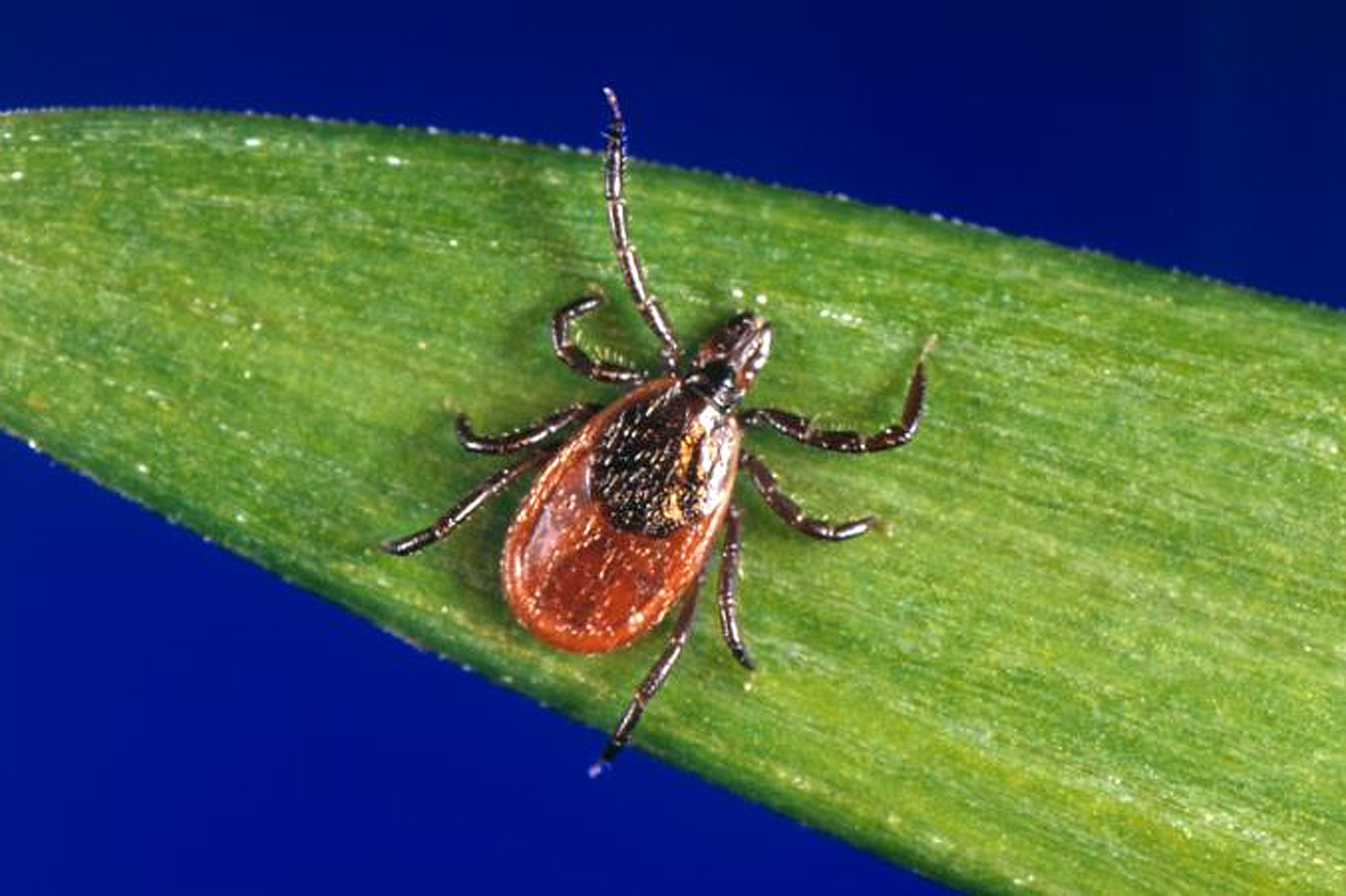
Unfortunately, many urban legends and myths have spread about tick removal. First, it’s said that burning or freezing the abdomen will make the tick release from its host. This may cause the tick to drop off, but it may also release the contents of its guts into the host, causing infection or spreading disease.
Second, it’s said suffocating the parasite with petroleum jelly or nail polish is effective. However, this isn’t true either. Ticks breathe through tiny holes in their skin called spiracles, and only need to breathe a handful of times per hour. Like fire and freezing, this technique may also do more harm than good, by causing the tick to regurgitate into the host’s bite wound.
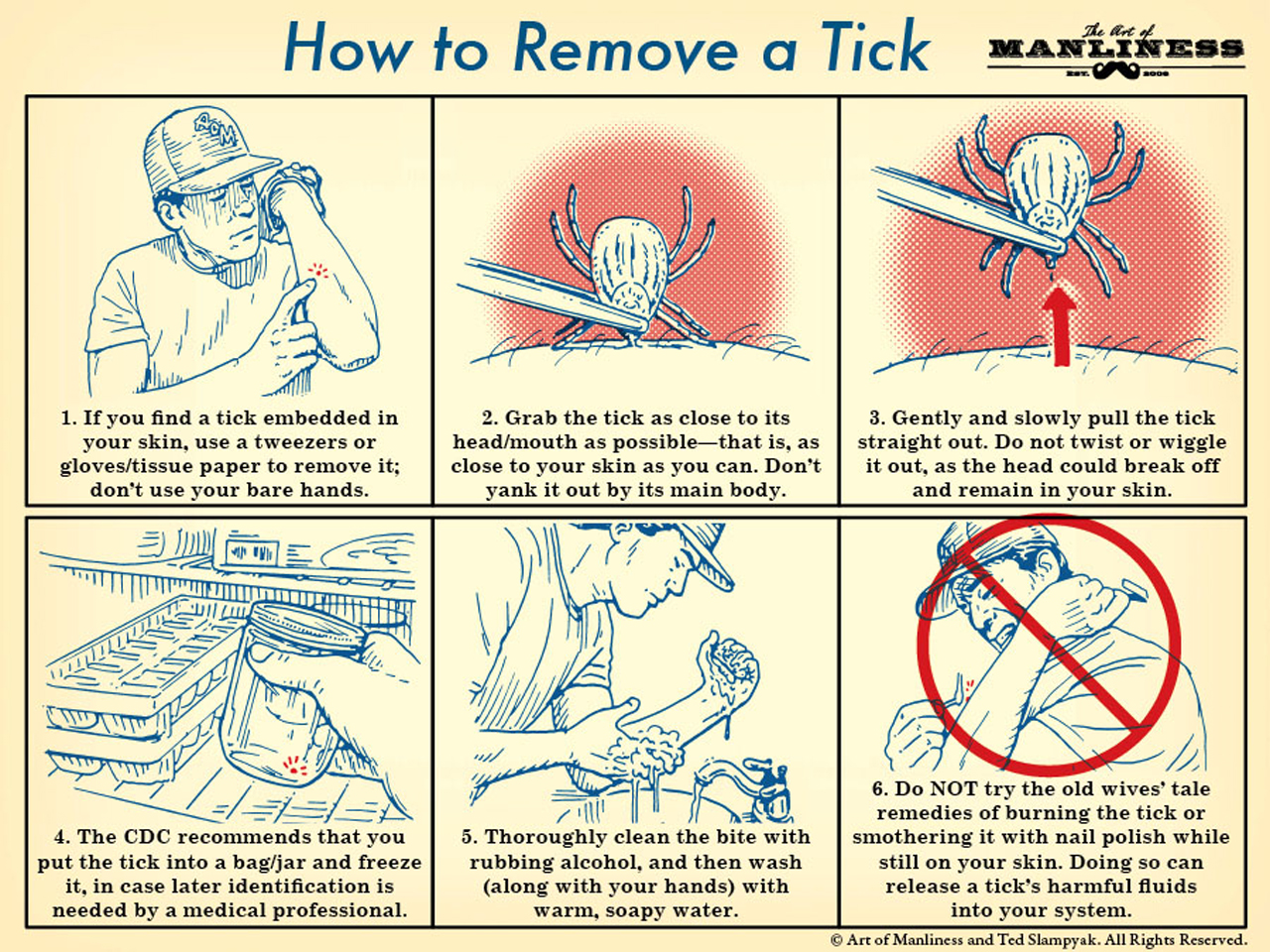
So, what’s the easiest way to remove a tick safely? The answer is simple: fine-point tweezers. Here’s an infographic from The Art of Manliness that shows how it’s done:
This computer-animated video shows the technique in motion:
The key is to use light pressure and a steady pulling motion, to avoid compressing or injuring the tick and increasing your risk of infection.
Of course, specialized tick removal tools do exist, and are often used by doctors or veterinarians to remove multiple ticks from a host quickly. However, for the average outdoorsman or survivalist, simply carrying a $2 pair of fine-point tweezers is simple insurance against these blood-suckers.